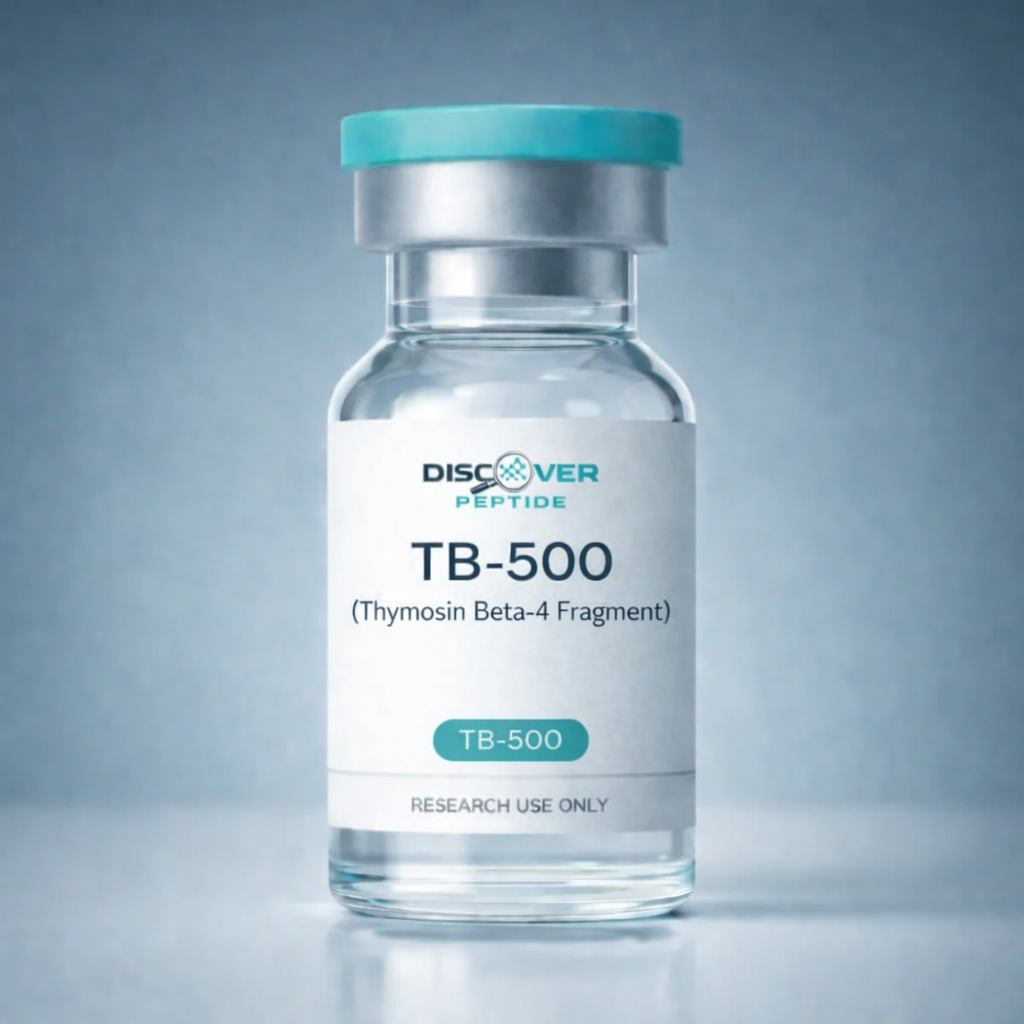
TB-500 Research Peptide (Thymosin Beta-4 Fragment)
TB-500 is a synthetic peptide fragment derived from thymosin beta‑4 and is widely referenced in biochemical and molecular research. It is explored for its structural features and peptide–protein interactions across controlled experimental models that interrogate cytoskeletal dynamics, signaling readouts, and stress‑response pathways.
Manufactured to high purity standards, TB‑500 is supplied exclusively for laboratory research use by qualified professionals.
Research Applications
TB‑500 is utilized in research workflows designed to probe cytoskeleton‑dependent phenotypes and downstream signaling in controlled laboratory settings. Common experimental contexts include:
- Actin dynamics assays — evaluation of G‑actin sequestration, F‑actin polymerization states, and stress‑fiber organization.
- Cell migration and adhesion phenotyping — scratch assays, transwell migration, and focal adhesion remodeling analyses.
- Endothelial biology & angiogenic signaling readouts — tube‑formation assays and transcriptional endpoints along VEGF‑related axes.
- Oxidative stress and innate signaling modules — pathway readouts under defined stressors, including adaptor‑mediated signaling nodes.
- Neural cell support and remodeling paradigms — glial lineage responses and neurite‑associated morphology in preclinical models.
- Host–pathogen and adjunct biology models — quantitative microbiology endpoints (e.g., CFUs) and inflammatory mediator measurements in animal infection frameworks.
Pathway & Mechanistic Context
Thymosin beta peptides are classically described as actin‑binding factors that sequester G‑actin, influencing the available monomer pool for filament assembly. Because actin polymerization governs membrane protrusion, endocytosis, cytokinesis, and mechanotransduction, modulation of the G‑actin/F‑actin balance can shift cellular behaviors that depend on cytoskeletal remodeling.
Across preclinical systems, TB‑4/TB‑500‑associated readouts have been reported alongside changes in angiogenic transcriptional programs (including VEGF‑linked signaling), extracellular matrix remodeling markers, and stress‑response pathways. In select cell models, thymosin beta‑4 has been examined within oxidative‑stress and innate signaling contexts, where experimental designs assess pathway‑linked mediator levels and cell‑viability markers under defined stress conditions.
Product Specifications
| Attribute |
Specification |
| Compound |
TB‑500 |
| Description |
Synthetic thymosin beta‑4 fragment |
| Molecular Formula |
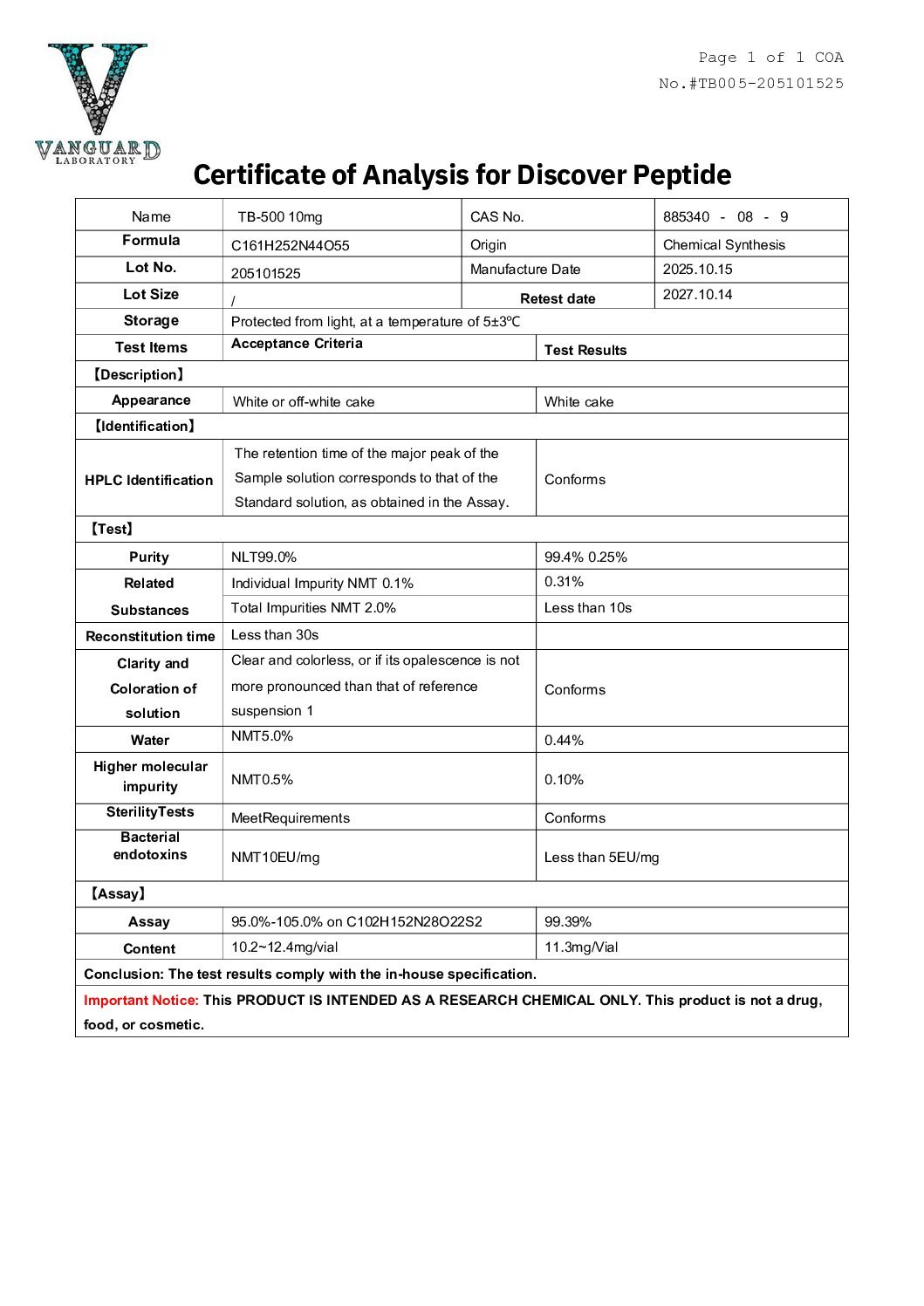
C₁₆₁H₂₅₂N₄₄O₅₅ |
| Molecular Weight |
~3468.77 g/mol |
| Purity |
≥99% (HPLC) |
| Appearance |
White to off‑white lyophilized powder |
| Solubility |
Soluble in water and common laboratory buffers |
Handling & Storage
- Store at −20 °C.
- Protect from light and moisture.
- Allow the vial to reach room temperature before opening to minimize condensation.
Intended Research Use
- For in vitro laboratory research and analytical studies only.
- Intended for use by qualified professionals in controlled research environments.
Disclaimer
This product is sold For Research Use Only (RUO).
Not for human or animal consumption.
Not approved for diagnostic, therapeutic, medical, or veterinary use.
Important Legal & Educational Notice
This document is provided solely for general educational and informational purposes. It does NOT provide medical advice, legal advice, dosing guidance, treatment instructions, or recommendations of any kind. Nothing in this document recommends, suggests, instructs, or endorses the use of any peptide, compound, injection technique, dosage, timing, frequency, or anatomical site. All information must be independently verified with a licensed medical professional. This document is intended to comply with applicable laws and regulations of the State of California.




Reviews
There are no reviews yet.