

Overview
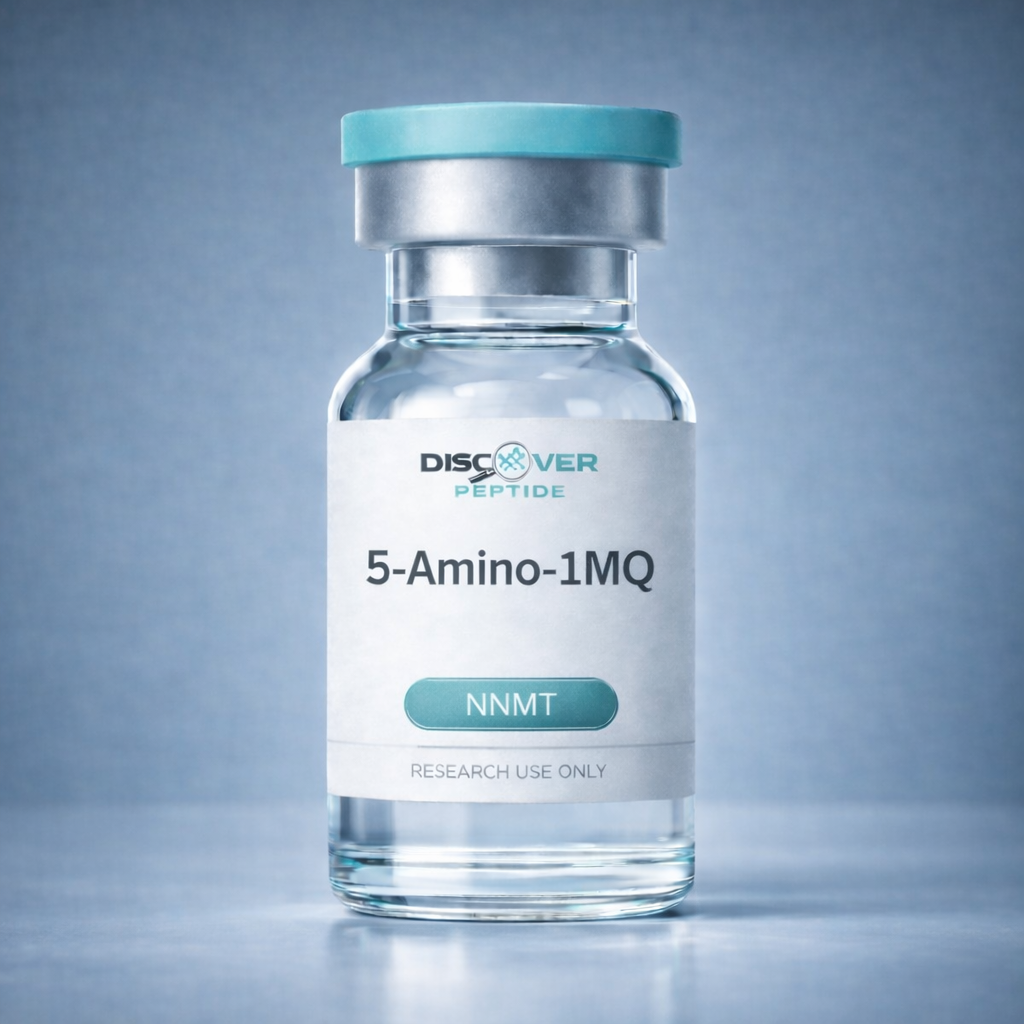
5-Amino-1MQ (5-amino-1-methylquinolinium) is a low-molecular-weight research compound described in scientific literature as an experimental modulator of nicotinamide N-methyltransferase (NNMT)–associated biochemical pathways. NNMT is an intracellular enzyme involved in nicotinamide turnover and methylation-dependent metabolic regulation.
Within non-clinical research models, 5-Amino-1MQ has been utilized to examine alterations in nicotinamide metabolism, NAD⁺-linked redox balance, and methyl donor utilization. All reported observations are confined to laboratory-based experimental systems, including cellular and animal models.
No claims regarding therapeutic benefit, clinical efficacy, or human application are made.
Biochemical Characteristics
5-Amino-1MQ is classified as a membrane-permeable small molecule with documented interactions related to NNMT-mediated methylation activity. NNMT participates in the conversion of nicotinamide into methylated metabolites, influencing intracellular NAD⁺ availability, methyl group flux, and downstream metabolic signaling in experimental settings.
Biochemical investigations describe NNMT as a regulatory node in cellular energy handling, redox equilibrium, and methylation-sensitive transcriptional networks. Studies involving 5-Amino-1MQ remain limited to enzymatic, molecular, and pathway-level analyses conducted under controlled research conditions.
Chemical & Reference Data
| Property | Specification |
|---|---|
| Compound Name | 5-Amino-1MQ |
| Chemical Name | 5-amino-1-methylquinolinium |
| Molecular Formula | C₁₀H₁₁N₂ |
| Molecular Weight | 159.21 g/mol |
| CAS Number | 42464-96-0 |
| PubChem CID | 950107 |
| Compound Class | Small-molecule research reagent |
Research Applications
In scientific literature, 5-Amino-1MQ has been employed as an experimental tool to study NNMT-associated metabolic pathways and downstream cellular responses in non-clinical models.
Common research contexts include:
-
NNMT-mediated nicotinamide methylation pathways
-
NAD⁺-associated metabolic regulation and redox balance
-
Cellular energy utilization and metabolic flux dynamics
-
Experimental glucose transport signaling pathways (e.g., GLUT-associated models)
-
Transcriptional markers related to stem cell and metabolic signaling in model systems
All applications are restricted to controlled laboratory research environments.
Pathway / Mechanistic Context
Mechanistic discussions position 5-Amino-1MQ within NNMT-linked regulation of intracellular nicotinamide pools, methyl donor balance, and NAD⁺-dependent enzymatic pathways. These processes have been evaluated in cellular and animal models to characterize shifts in metabolic efficiency, transcriptional signaling, and redox-sensitive pathways.
Additional experimental observations reference interactions with mitochondrial function, oxidative stress–associated signaling, and epigenetic regulation within preclinical research systems. All mechanistic interpretations remain observational and are not indicative of clinical relevance.
Preclinical Research Summary
Preclinical publications describe 5-Amino-1MQ-associated findings in rodent and cellular models involving metabolic flux, adipose and muscle tissue signaling markers, and NNMT-regulated transcriptional profiles.
Additional studies have examined NNMT expression in relation to cellular proliferation markers, stem cell signaling pathways, and metabolism-associated phenotypes. These findings are strictly limited to experimental research models and do not imply diagnostic or therapeutic application.
Form & Analytical Testing
5-Amino-1MQ is supplied as a research-grade small-molecule material (non-encapsulated). Identity and purity are assessed using analytical techniques commonly applied to small-molecule research compounds, including chromatographic separation and mass spectrometric characterization.
Storage & Handling
-
Store at recommended laboratory conditions appropriate for small-molecule research compounds
-
Protect from excessive heat, moisture, and light
-
Handle using standard laboratory safety protocols
Intended Research Use & Disclaimer
This product is sold for Research Use Only (RUO).
-
Not for human or animal consumption
-
Not approved for diagnostic, therapeutic, medical, or veterinary use
-
Intended exclusively for qualified professionals in controlled research environments
Important Legal & Educational Notice
This document is provided solely for general educational and informational purposes. It does NOT provide medical advice, legal advice, dosing guidance, treatment instructions, or recommendations of any kind. Nothing in this document recommends, suggests, instructs, or endorses the use of any peptide, compound, injection technique, dosage, timing, frequency, or anatomical site. All information must be independently verified with a licensed medical professional. This document is intended to comply with applicable laws and regulations of the State of California.

Reviews
There are no reviews yet.